



You don’t need to find a new channel to grow through a SaaS plateau. You need to capture existing demand, nurture and monetize those people and then fill key content paths to improve the demand capture further.
I see this story all the time. You’re passionate about your product and working hard toward your goals, but the growth needle just isn’t moving. You start to wonder if all the effort you’re putting in is going to amount to anything. You get existential about it.
Almost every SaaS founder (or in-house marketer) ends up here at some point.
The default answer is always the same: “I’ll just get more leads. I’ll get more people coming to my website and signing up.” So you start looking at expensive ads, SEO, anything to get people in the door.
But what if the answer is actually 10 times simpler than you think, but just hard to admit?
In this post, I’m going to share a simple three-part framework that I use with my clients to turn their growth around by focusing on the value they already have. I call it the Turnaround Flywheel.
I’ll cover:
By the end of this post, you’ll know what you need to do to start turning around your SaaS growth and have a list of projects you can prioritize into a real roadmap for the next quarter.
Let me show you what I mean with two businesses.
Business A – I call them the acquisition addict – starts with good traffic and $10K MRR.
They spend on ads and increase traffic by 10% monthly.
Numerically, they will grow. Of course. If they’re adding more traffic and it converts at the exact same rate, their MRR will grow in a linear fashion.
Lo and behold, after three months, they have added $13K of extra MRR.
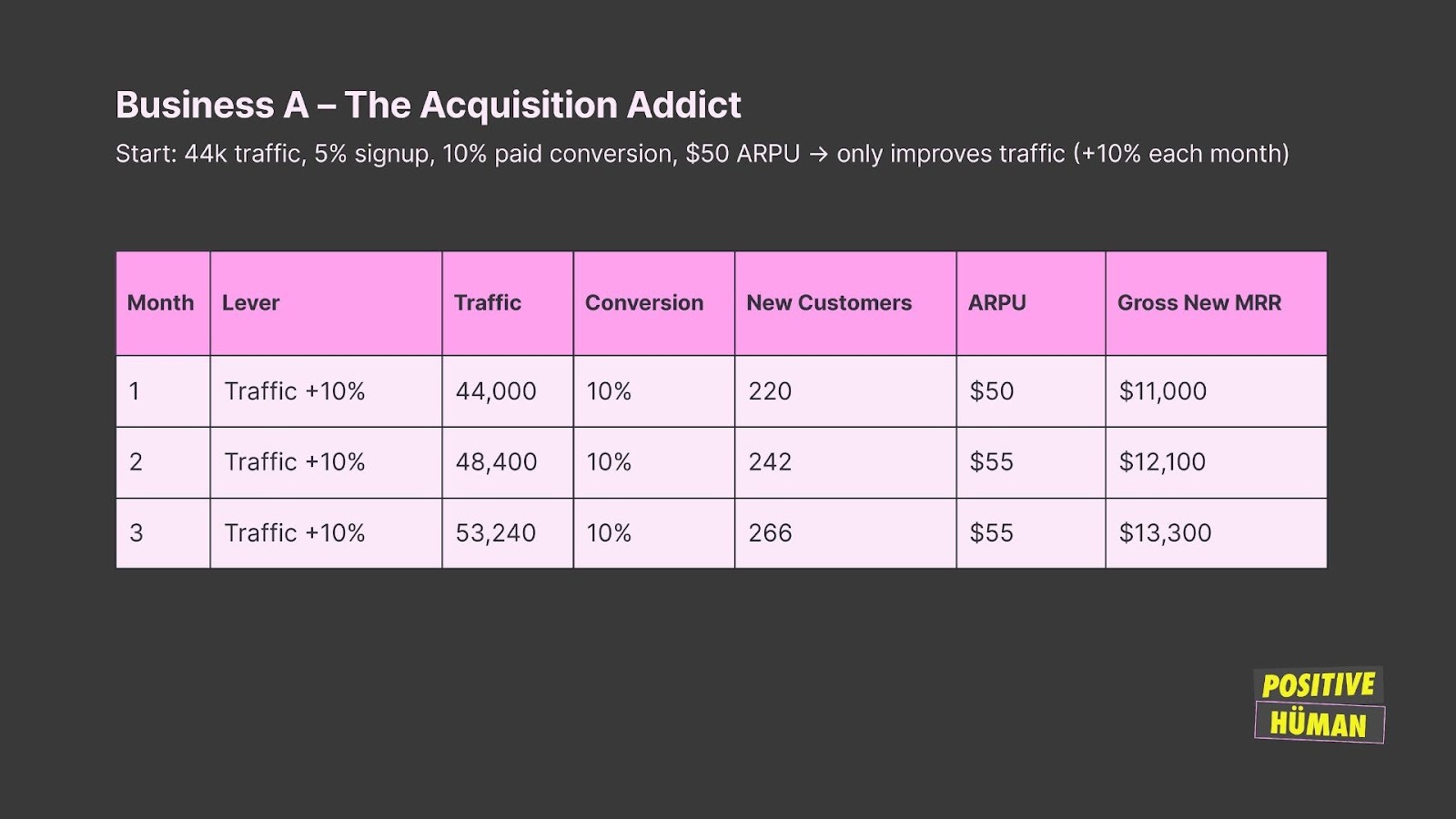
Business B is identical: they’ve got the same product, same traffic, same starting MRR.
But they take a different path.
They focus first on increasing conversion, then ARPU, then traffic.
They end up with slightly more money than Business A.
A couple thousand dollars of difference doesn’t sound dramatic and certainly not worth pivoting your whole growth model, right?
But here’s what matters:
Business A is addicted to traffic, and Business B is building something more sustainable.
Just like any addiction, acquisition is fun at the start.
But after a while it becomes dangerous.
Once you turn off the ads, game over. You have no channel to acquire customers and no way to make money from them.
Even if you think in terms of organic acquisition, you’re still fully reliant on appeasing a pagerank algorithm and I think we all know how fragile that makes your business. One algorithm update and suddenly all that traffic dries up.
Business A is deeply inefficient—pumping money/effort into the top of the funnel and hoping conversion holds steady.
It doesn’t work that way.
While Business A scrambles to feed their traffic addiction, they’re missing a huge growth opportunity that Business B wastes no time capturing.
They decide that instead of increasing the traffic to their website by adding new channels or new budget, they’re going to solve their growth problem by taking a different path:
They focus first on increasing conversion, then increasing the average revenue per user (ARPU), then once they have that all worked out, they add meaningful traffic.
The effect is that for every additional visitor, by the end of this hypothetical three month period, Business B converts more visitors, extracts more revenue per user and then cycles through this process over and over again.
Over time, a huge rift will open between the failing growth rate of Business A (linear) and Business B (exponential).

I call the approach that Business B took The Turnaround Flywheel and it’s based on the system that I use with the companies I work with.
The framework has three distinct phases:
The goal of this flywheel isn’t to prescribe specific timelines or exact tactical outputs, but to move away from thinking that adding additional channels or investment in existing acquisition channels is the best way to grow a company.

Numerically it delivers bad performance. Practically it delivers bad performance.
The approach of improving the overall growth system (the turnaround flywheel) is a much better approach both in theory and – as my clients can attest – in practice.
For the purposes of this post, I’ve used an example 3-month roadmap like the one I would work on with one of my actual clients, but there’s no specific reason to make this 3 months. You could do it in 3 weeks or in 3 quarters.
Every business is different. Act accordingly.
Not everyone who visits your website is ready to try your product. You should have a way to capture the email addresses of those who aren’t ready, and to help those who are to take the next step.
Here’s a story to illustrate that:
I had a client who ranked 1st place on Google for a high intent term. The page was for a {topic} generator style tool which people would commonly use before buying a tool like my client’s.
Despite getting thousands of pageviews every month, lots of people who used the free tool got what they came for and then went away.
The flow went like this:
When we started working together, I helped them to restructure this flow to the following:
Here was the result:
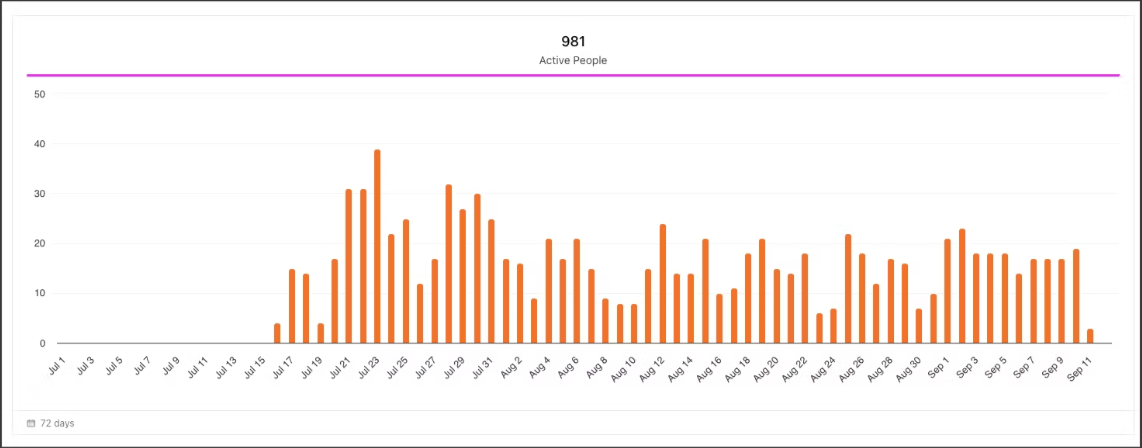
In just 72 days, they captured 981 new email leads. Some of these would go on to sign up for the product itself, others remain on the marketing email list so we can convert them over time.
To show you the visual flow of this, let me show you a different example:
I worked with a company that had a tool for financial advisers whose big goal was to scale their assets under management.
The company created a lead magnet: “Seven Critical Mistakes to Avoid When Scaling Your Assets Under Management.” Here’s an illustration of what their landing page for this looked like:
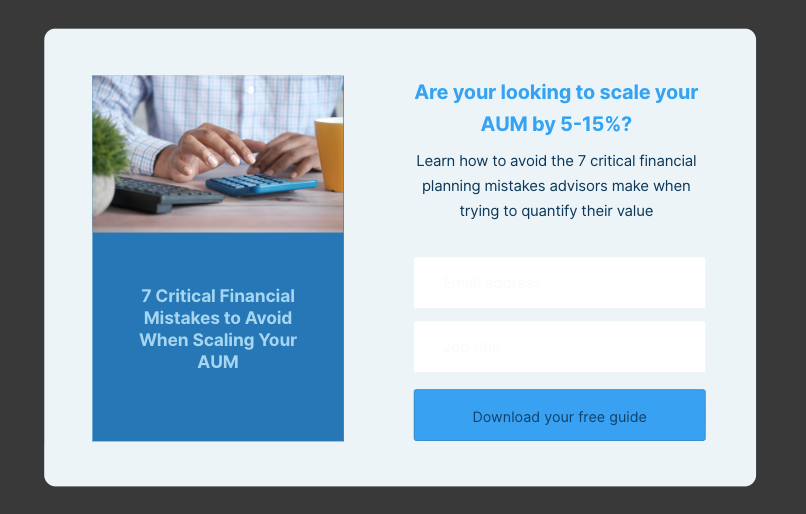
But remember, while most people send visitors directly to a PDF or to a page that says “Nice one, that’s going to arrive in your inbox” you know that that’s a big mistake.
When someone gives you their email address, they’re telling you: “That’s a problem I want to solve.”
And you’re building a SaaS that solves it.
So instead of sending them straight to the PDF, send it via email and redirect them to a thank you page that shows how you solve their problem.
The page should say something like: “That guide will arrive in your inbox in 5 minutes. But here’s a 5-minute video showing how you could solve this problem with our product. Watch this and you’ll see how we can help you.”
Here’s the illustration of how this looked for the client:

The financial adviser tool crushed it with this approach. They acquired significantly more good-fit sales.
I’ve done this with so many companies now and it literally always works. I’ve never had an instance where this doesn’t work.
Another client had a lead magnet just lying around—a PDF someone in the marketing team had made that wasn’t even live on the website.
We put the same playbook in place and attributed $9K of additional revenue to that one lead magnet in five months.
In month one, you improved the conversion rate by giving people a way to take action in a meaningful way, whether they were ready to sign up or not.
Month 2 is about using email to nurture those leads and lifecycle email to monetize more sign-ups, so that your average revenue per user increases over time.
To see the value of the opportunity here, consider these three groups:
If you think about those three groups right now, you can probably see how much potential MRR is sitting in the people you already have in your email list and user list.
Can email really make a meaningful difference here?
Emphatically, yes!
You should be sending two types of emails.
Email newsletters aren’t sexy, but they’re back in style and they work.
Here’s what I recommend, and it’s going to be uncomfortable: Send three emails a week to your non-customers.
Email is the one channel where you can consistently get in front of potential customers with your message. You’re not relying on an algorithm. You’re just in their inbox. Even if they only see your subject line and business name, eventually someone’s going to open one.
But what do you write? In week 1 of my lifecycle sprints with clients, I write them 27 broadcast emails, 9 for each of the following:
Multiply that by how long you’ll have someone’s email address, and you’re building significant capital with these people.
The goal here is not to get someone to convert first time, but to build up enough mental availability with your buyer to the extent that when they’re ready to buy, you’re the obvious choice.
Beyond broadcast email, you should have a lifecycle sequence fires every time that a customer could give you more money or decrease the amount of money they give you. I call these Money Moments.
Many people set up an onboarding campaign and then never think about lifecycle again.
This is a missed opportunity and leaves a lot of money on the table. Here’s some common examples of weak areas you should try to plug ASAP in your lifecycle:
Lifecycle email doesn’t need to be complicated – in fact, the simpler the better. But it does have to exist – or you’ll never capture a huge amount of value that you would otherwise have been able to collect just from the people in front of you.
Month one was about getting email addresses. Month two was about converting those people and getting more money from existing customers.
Month three is about filling key content gaps your buyers have questions about.
Content isn’t sexy these days, especially when everyone’s panicking about AI demolishing search traffic.
But I still believe content to be an incredibly meaningful part of any SaaS marketing system. And specifically – because we’re focused mostly on converting more people rather than just acquiring more traffic – these two kinds of content.
If you distill all the advice about responding to AI and search, it comes down to: Have an opinion and say it over and over again.
Competitor comparison content helps your ideal buyer to place you in relation to your competitor.
No two companies are the same, and in a worst-case theoretical scenario where you are the exact same company as your competitor, being helpful to your ideal buyer by making that comparison clear will likely tip you ahead of your competitor in their buying choice.
Some people don’t like competitor comparison content. But when they say this, it usually means that they don’t like unfair comparison content that takes potshots at their competitor.
Good competitor content follows the HDFO framework:
I’ve written competitor comparison content for dozens of SaaS companies and followed this framework.
One of the hardest things to do is to structure a comparison page effectively. Here is how I think about it (top to bottom):
Some advice: Don’t be afraid to lose. If you win every point, everyone knows you’re being disingenuous. Say “We’re more expensive” or “They have a more generous free plan” and explain why. Be confident about who you provide value to.
You should have a competitor comparison page for the most common competitors that come up in buying choices. You should also have competitor comparison content for solutions that are not software, such as using a spreadsheet, hiring additional people or doing nothing.
But if you must prioritise, prioritise your biggest competitors – not only do they have search traffic but they are likely to be the ones that are most front-of-mind for your ideal buyer.
The second type of content that you should write for your website this month is pain point-focused content.
This is simple blog content written to help buyers who are already on your website. You’re not trying to get huge search volume. You’re giving people the information they need to choose you.
Every piece should focus on the strategic narrative about how buyers get the most value from you. That tends to align with the highest conversion path.
An example: When I was in house at Podia, we spent significant time trying to work out the best conversion path—data-driven approaches, regression analysis, testing.
In the end, we made a guess based on gut feeling and asking what’s the fastest way to achieve value.
We came up with:
Simply: Build a funnel. Not revolutionary. But we put that narrative in literally every single piece of pain-point content on the blog.
And how do you know what makes good pain point focused content? Here’s some thought starters for you. You can fill in the blanks:
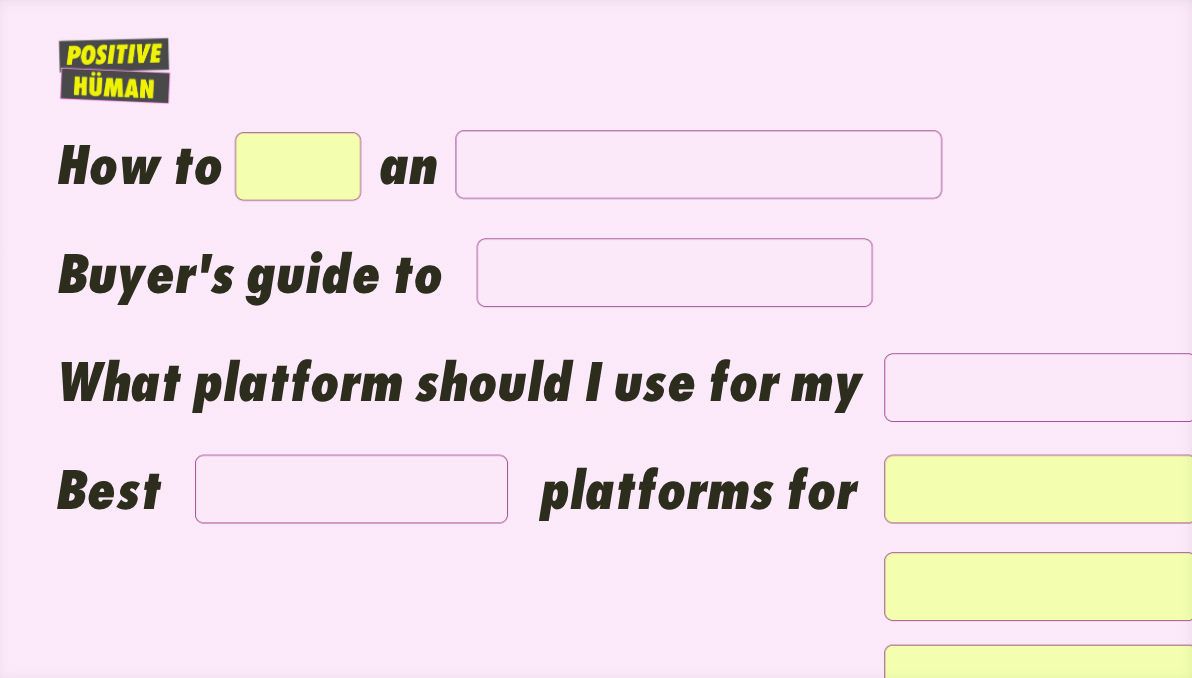
Then put your strategic narrative into everything: “You want to do this thing, but what you really want is more revenue. So you should do these things: 1, 2, 3, 4.”
Content does take more than one month, clearly, even with AI to help you write. This is a longer-term investment.
To go back to the example of Podia: When I helped to recover the content performance, we started halfway through the year, and by the start of the next year, we were only really scratching the surface, having published already 20 or so pieces of pain point focus content.
This stuff takes a long time. But every small step forward results in improved performance overall.
This flywheel is not complex.
Month 1: Capture email addresses from people who come to your website.
Month 2: Nurture them with consistent email. Get in front of them until you feel like you’re sick of being in front of them.
Month 3: Create content that feeds back into the quality of leads you’re capturing.
Marketing people love to tell you marketing is complex, like they have magical knowledge.
The reality is simpler:
Marketing is those three things over and over again for a long period of time.
The tactics change, but that’s what people do when they actually grow.
Don’t buy into the lie that you need more traffic to grow your company. You’re probably not doing a good enough job of converting what you already have. Focus on that. It’s 10 times the leverage.
The best marketers I know will happily tell you it’s this simple.
Get over that acquisition addiction. It’s a long path, but the road to recovery is good.
If your growth has stalled and your first instinct is to spend more on ads, pause. You might be leaving massive value on the table in your existing traffic, email list, and customers.
The Turnaround Flywheel helps you capture that value systematically over three months.
That’s exactly what I do with clients when they hire me for hands on consultancy. In 90 days, we build your lead magnet and thank you page flow, set up your email cadence and lifecycle sequences, and create your comparison and pain-point content.
Most clients see results in the first 30 days—more signups from email, higher conversion rates, and more revenue from existing customers.
Or if you just want me to help you fix your email and lifecycle, that’s what my Lifecycle Sprint is for.
Book a free 30-minute jam session.
We'll talk about your company, look at some solutions, and if it's a fit, maybe we work together.
(Worst case scenario: I get you unblocked and you make a new friend!)